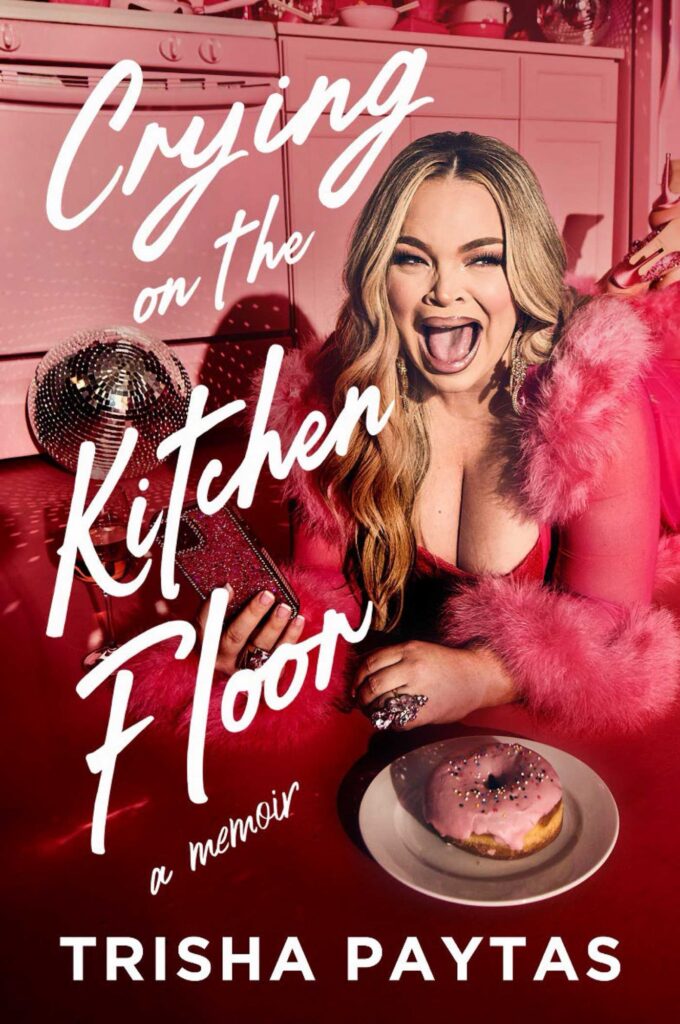
As someone who is chronically online, I’ve followed Trisha Paytas since the early days of YouTube, when the platform had much the same pulling power that TikTok has today in transforming ordinary people into internet celebrities.
Trisha has made plenty of mistakes and has been cancelled more times than I care to remember for her problematic behaviour and controversial videos. A memoir presented an opportunity to finally discover the truth, or at least her version of it.
One thing that immediately struck me was her acknowledgement that she is an unreliable narrator. I wondered whether this was an exercise in self awareness or a preemptive attempt to save face in anticipation of those who might question the validity of her recollections. It almost conditions you to approach the book as you would one of her infamous YouTube videos, where the truth is often embellished and you’re left questioning how much of what you’ve just consumed you actually believe.
And yet, for the most part, I did believe her.
Her recollections of her childhood and early home life were particularly interesting, offering some insight into the person behind the persona and how she came to cultivate and perpetuate the reputation she had online. There’s something quite sad about the way in which the behaviour that seemingly caused her so much personal distress was also the behaviour that rewarded her professionally. When controversy becomes financially lucrative, there is little incentive to break that cycle.
Her struggles with substance abuse were something I had only been passively familiar with, so it was interesting to gain a greater understanding of the extent to which addiction consumed her life, alongside her mental health struggles. I felt she took a considerable amount of accountability for her past behaviour, contextualising many of her very public mistakes without necessarily absolving herself of responsibility for them.
My biggest criticism is that the memoir isn’t quite as detailed as I had imagined a memoir from Trisha Paytas would be. She’s renowned for divulging the most intimate and sometimes gratuitous details of her life, often without much consideration for the consequences. Given that reputation, there were occasions when the book felt surprisingly restrained.
Perhaps that’s an inevitable consequence of writing a memoir when you’ve already spent much of your adult life publicly documenting it. For those of us who have followed her for years, the appeal isn’t necessarily in discovering what happened, but in gaining a greater understanding of why it happened and how she now reflects upon it.
As a reading experience, the book was enjoyable. The chapters weren’t overly long but had enough substance to ensure they never felt rushed. The writing was accessible and engaging enough to keep me invested, and despite the sheer number of experiences and controversies she has to draw upon, the memoir felt cohesive.
I’m not entirely convinced, however, that someone unfamiliar with Trisha would derive as much from the book as someone who has followed her over the years. There’s an appreciation to be had not only for the extensive lore surrounding Trisha herself, but for the culture of YouTube and the evolution of online celebrity. For those who have never really immersed themselves in that world, I imagine it’s difficult to comprehend the sheer scale of internet infamy and the influence these personalities wield. Someone can be virtually unknown to the general public whilst simultaneously being one of the most recognisable and scrutinised figures within an entire online ecosystem.
Her candour regarding the considerable sums of money she accumulated online was particularly refreshing. It offered an interesting insight into just how lucrative YouTube was during its heyday, how addictive that financial gratification could become and how the landscape of online content creation has since evolved. There’s an interesting conversation to be had about the audiences who consumed that content, too. We were often watching someone visibly struggling, yet our fascination with her behaviour inadvertently rewarded and encouraged its continuation.
It’s difficult not to find Trisha endearing, though. She comes across as considerably more intelligent and perceptive than her online persona would often have you believe, particularly in the language she uses to articulate her experiences and the way she reflects upon her behaviour. Regardless of how much editorial assistance went into the book, there’s a degree of introspection that feels at odds with the caricature she’s spent years cultivating.
I found myself rooting for her in much the same way I did in real time, when she finally appeared to find some semblance of stability in her personal life. Watching her get engaged, married and eventually become a mother after being so candid about her fertility struggles felt particularly gratifying as someone who had witnessed so much of the chaos that preceded it.
It’s evident that she’s making a conscious effort to confront the traumas of her earlier life, not necessarily to rid herself of them, but to acknowledge and understand them in order to better navigate her life alongside her mental health struggles.
Perhaps the most compelling aspect of Trisha’s story isn’t the controversy, the celebrity encounters or the extraordinary amounts of money she’s made from documenting her life. It’s the prospect of someone who spent so many years seeking validation from strangers finally finding some fulfilment away from their approval.
For a woman who built an empire out of crying on her kitchen floor, there’s something rather lovely about the possibility that she no longer needs to.