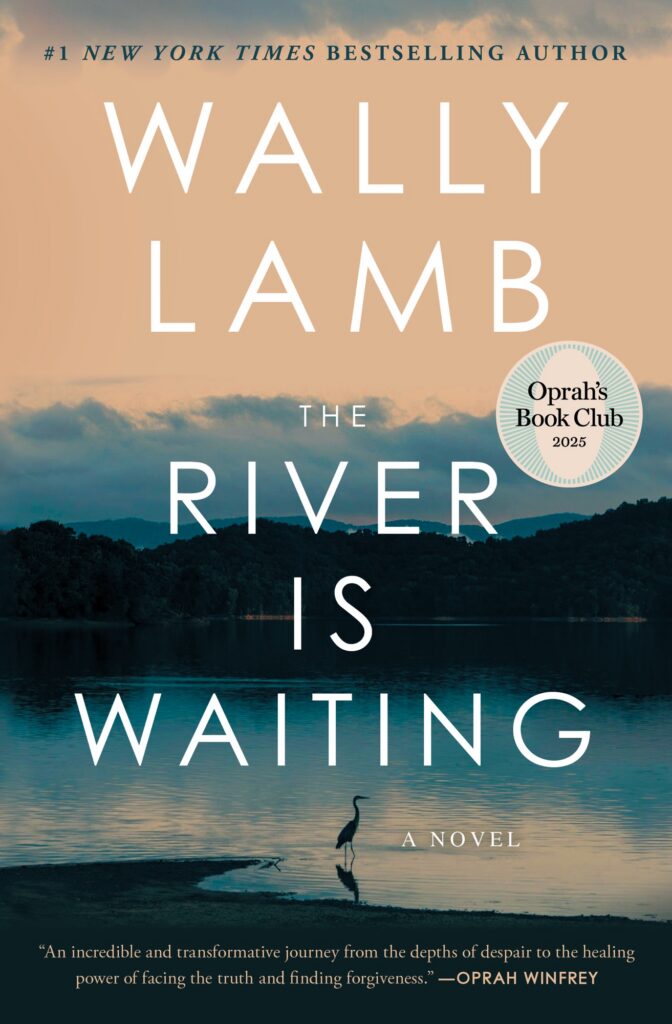
After losing his job and becoming a stay at home father to twin toddlers, Corby finds himself increasingly dependent on alcohol and anti-anxiety medication. When a tragic accident occurs as a consequence of his addiction, he is sentenced to three years in prison. Told from Corby’s perspective during his incarceration, The River Is Waiting explores grief, addiction, recovery and the possibility of redemption.
It took me just over three weeks to finish this one, although that had little to do with the book itself. It is probably the longest novel I’ve read this year, and certainly one of the bleakest. Given its subject matter, that’s hardly surprising, and moments of respite are understandably few and far between. However, scenes involving mural painting and the prison library offered some welcome relief from the otherwise relentless misery.
Lamb’s writing is accessible and the novel is easy enough to get through, despite the weight of its subject matter. I’d seen considerable praise for the book, particularly regarding its emotional impact, but I wasn’t quite as moved as I’d anticipated. While I sympathised with the characters and the circumstances they found themselves in, I never felt particularly affected by their experiences. Perhaps that’s because I’ve never endured anything comparable, but there was a certain emotional distance that I struggled to overcome.
I also found some of the supporting characters rather stereotypical, particularly the correctional officers, who occasionally felt like caricatures lifted from a television prison drama. I can’t claim to know how accurately these portrayals reflect the reality of prison life, and I imagine Lamb undertook considerable research, but they nevertheless felt a little too familiar and predictable.
My biggest frustration, however, was Corby’s journey towards redemption, or rather the lack of a satisfying resolution to it. Throughout the novel, he wrestles with the belief that he doesn’t deserve forgiveness for the devastation his addiction has caused his family. Despite this, I found myself rooting for him as he confronted his dependency, navigated sobriety and began to reckon with his grief. I was particularly interested in how these experiences might shape his life beyond prison, and whether he could eventually find some semblance of peace while accepting the consequences of his actions. Unfortunately, that was something the novel never really allowed us to explore.
The ending was ultimately my greatest disappointment. What I had expected to be a difficult but meaningful exploration of redemption instead took an unexpected turn that felt more like a convenient way to conclude the story than a natural culmination of everything that had come before. Rather than offering a satisfying resolution to Corby’s emotional journey, it left me feeling somewhat shortchanged.
The River Is Waiting is undoubtedly a compassionate novel with some worthwhile things to say about addiction, guilt and grief. Yet, for all its emotional ambition, it never quite resonated with me in the way I’d hoped. And while I appreciated much of the journey, the ending left a lingering sense of dissatisfaction that ultimately coloured my impression of the book.