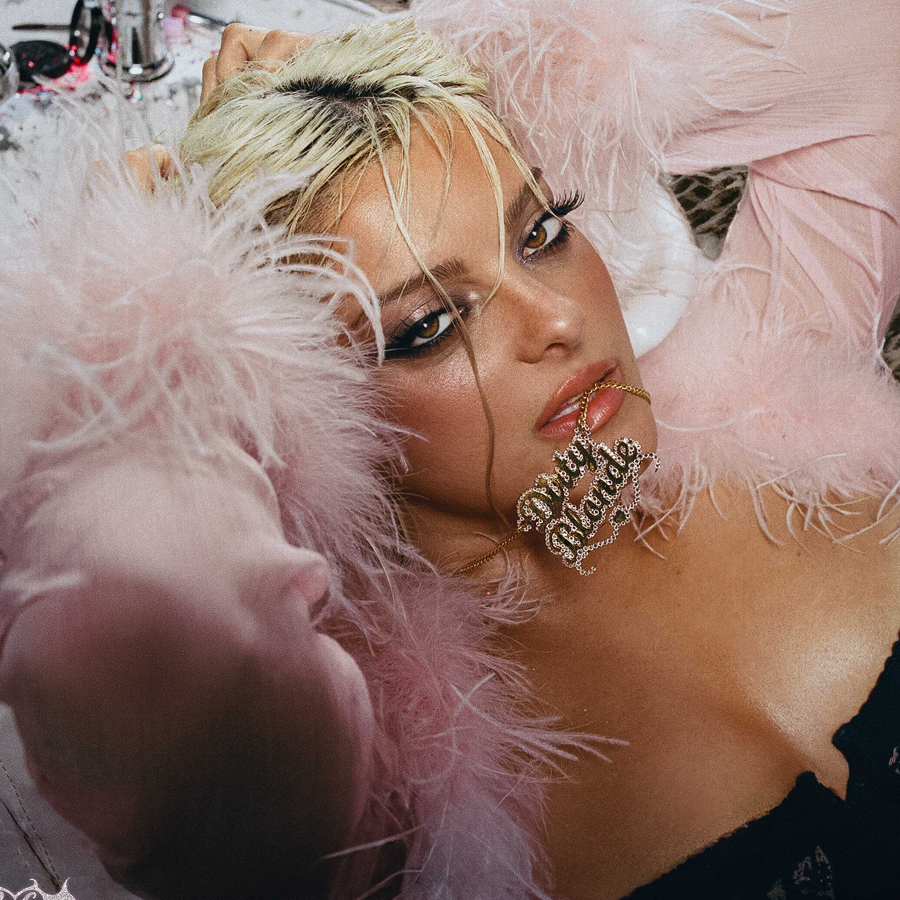
If you didn’t know who Bebe Rexha was, there’s a pretty solid chance you’ve come across a song she’s either featured on or written. Having spent more than 15 years in the music industry, she can reasonably be considered a veteran of modern pop. Over the course of her career, Rexha has successfully navigated several shifts in the pop landscape, from the EDM boom to the streaming and TikTok eras, while also embracing genre crossovers along the way. Equally adept behind the scenes as she is in the spotlight, she has built an impressive catalogue of songwriting credits alongside her work as a recording artist, including co-writing Eminem and Rihanna’s global smash ‘The Monster’.
This longevity hasn’t come without its tribulations, however. Despite enjoying a string of major singles, Rexha’s relationship with sustained commercial success has often been inconsistent. Her debut album, Expectations, produced sizeable hits but failed to establish her as a dominant album artist, while follow-up Better Mistakes debuted to muted commercial interest and quickly disappeared from the charts. Even her self-titled third album, Bebe, arrived on the back of the global smash ‘I’m Good (Blue)’ yet struggled to translate that momentum into sizeable album sales. As a result, Rexha has periodically found herself assigned to the stan-culture-created “Khia Asylum”, a tongue-in-cheek, often mean-spirited corner of the internet reserved for pop girls whose projects are perceived as commercial disappointments.
Rather than shy away from the “Khia Asylum” label, Rexha embraced it during the promotion of her album, displaying the self-awareness that has become one of her most endearing qualities online, coupled with a refreshing honesty about the realities of the music industry. She has frequently alluded to feeling overlooked, a frustration made all the more poignant by the fact that many of the songs she helped write or perform became far bigger than the profile she was ultimately afforded.
Following her departure from Warner Records after more than a decade, Rexha has entered a new chapter through a partnership with Empire. Framing the move as a fresh start, she embraced the creative freedom that comes with operating outside of a major-label. For an artist who has long felt overlooked despite her proven hit-making credentials, the transition represented an opportunity to reshape the narrative on her own terms rather than continue chasing validation from an industry that had rarely afforded her the recognition enjoyed by many of her peers.
It took a handful of singles from Dirty Blonde before momentum began to build. While Rexha initially planned to release one track per week in the lead-up to the album, the unexpected success of the Faithless-sampling ‘New Religion’ forced a change of strategy, with the song outperforming expectations and giving the campaign its first genuine breakthrough moment. The success of ‘New Religion’ provided Rexha with the strongest launchpad she’d enjoyed in years. The question, then, is whether Dirty Blonde can capitalise on that momentum.
If there was any doubt as to where Rexha’s strengths lie as an artist, Dirty Blonde wastes little time dispelling it. Opening duo ‘Hysteria’ and ‘Tokyo’ set the tone immediately, pairing thumping basslines with punchy runtimes that feel tailor-made for hour headphones, car stereo or a sweaty dancefloor. They’re confident, immediate and, most importantly, fun.
That sense of fun permeates much of the record. ‘Çike Çike’ is delightfully camp, evoking the feeling of stumbling into a day rave after promising yourself you’d only stay for one drink, while ‘New Religion’ remains one of the album’s strongest moments. Beneath the pulsating production lies a surprisingly poignant middle eight that gives the track a little emotional depth often absent from contemporary dance-pop.
Not every experiment lands quite as successfully. ‘$.H.I.T’ trades the album’s European club influences for a more trap-inspired sound that recalls the playful irreverence of Doja Cat, but ultimately feels less distinctive than the material surrounding it. Likewise, ‘One Day’, ‘Time’ and ‘The Way I Want You’ represent the album’s weakest stretch. None are actively poor songs, yet their slower, more conventional pop sensibilities disrupt the momentum established elsewhere. After spending much of its runtime encouraging listeners towards the dancefloor, Dirty Blonde briefly forgets why the party was working in the first place.
Thankfully, Rexha quickly regains her footing. ‘Nobody’s There’ restores the album’s pulse, while ‘Night Falls’ paints a vivid picture of post-club heartbreak, capturing the hollow feeling of watching someone move on without you. It serves as an effective prelude to the album highlight ‘Sad Girls’, a reunion with long-time collaborator David Guetta that delivers exactly what fans would hope for: big vocals, festival-sized production and a smidge of emotional core sturdy enough to support them.
One of Dirty Blonde‘s most surprising strengths is its length and Rexha opts for concision. Most tracks arrive, make their point and leave before overstaying their welcome. Ordinarily such short runtimes can feel too transactional, but here they contribute to the album’s sense of momentum. The result is a record that rarely lingers and is all the more better for it.
Perhaps most impressive is Rexha herself. Vocally, she sounds more confident and comfortable than ever. Earlier in her career there were moments when her delivery felt strained by the demands of current pop, but Dirty Blonde finds her fully settled into her strengths. She isn’t trying to be a grand diva or a confessional singer-songwriter; instead, she embraces the role she occupies best: an architect of unapologetically big dance-pop.
Dirty Blonde is not a lyrical masterpiece, nor does it aspire to be. What it offers instead is something arguably more valuable: thirty-odd minutes of escapism powered by some great basslines, infectious hooks and an artist who finally sounds comfortable in her own skin. Bebe Rexha may never receive the acclaim afforded to some of her contemporaries, but with Dirty Blonde she delivers a timely reminder that the dancefloor remains her natural habitat.
Bebe Rexha releases ‘Dirty Blonde’ on Friday 12th June 2026 via Empire.